
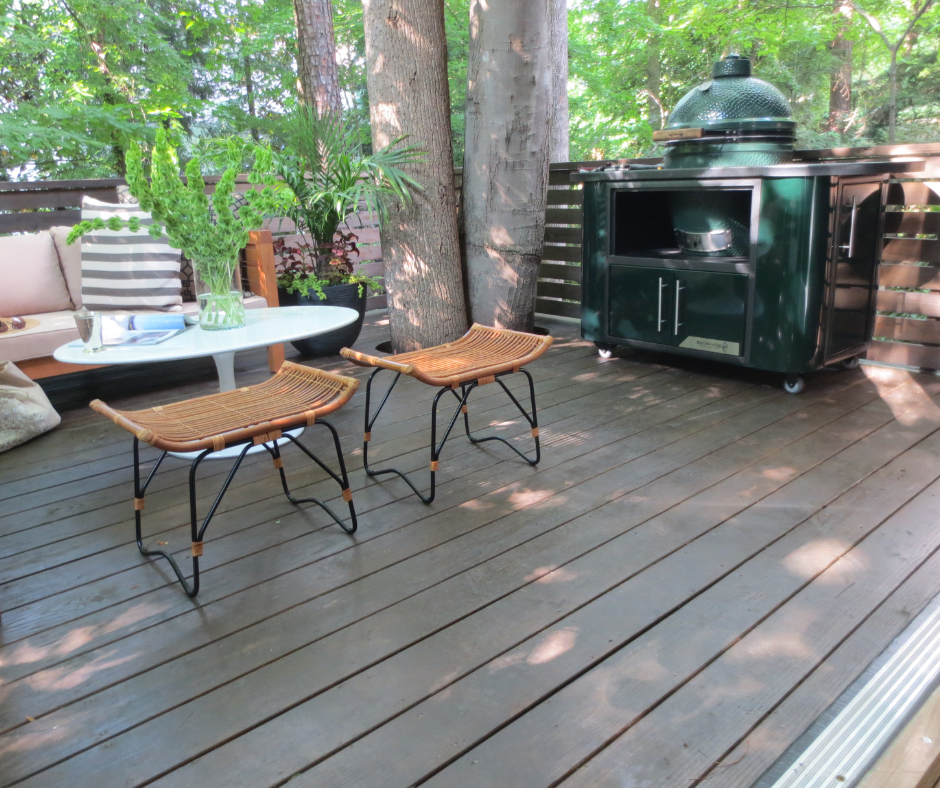
We may be approaching winter, winter, but this is the perfect time to start planning your dream deck for spring. Every year, more than a million decks are built or upgraded throughout the U.S. — and homeowners are rediscovering the charm, comfort, and energy-saving practicality of porches and outdoor living spaces.
A well-designed deck adds beauty, value, and year-round enjoyment to your home. But before you break ground, there’s one big question to answer: Should you choose wood or composite decking?
The Hardworking Heart of Your Deck
Your decking boards — the part you walk, relax, and gather on — face a daily onslaught of sun, rain, and foot traffic. They have to look great, last long, and feel good underfoot.
That’s why pressure-treated Southern Pine remains the most popular real wood decking choice in America. It’s durable, sustainable, and naturally beautiful — but take a closer look at how wood and composite decking really compare.
Wood or Composite Decking: A Side-by-Side Comparison
Appearance
When it comes to natural beauty, there’s no substitute for real wood. Wood decking offers warmth, grain, and texture that can’t be faked. Even the most advanced composites still look and feel artificial beside authentic wood.
Comfort
Wood stays naturally cooler than plastic or composite materials, even in direct sunlight. That means no more sizzling hot surfaces or scorched feet during summer barbecues.
Cost
If budget matters, wood is the clear winner. Composite or plastic decking can cost up to five times more than real wood, making wood the more economical and practical choice.
Safety
Modern pressure-treated wood is safe for people, pets, and the environment. Today’s preservatives are free of arsenic and chromium while still providing long-lasting resistance to rot and termites.
Renewable & Sustainable
Wood is the only decking material that grows back. Sustainable forestry ensures a steady, renewable supply — unlike composites made from petroleum-based plastics.
Eco-Friendly
Manufacturing plastic or composite decking requires up to eight times more energy than processing wood. Wood also produces less pollution and uses fewer natural resources, making it the greener choice.
Strength & Stability
Wood is strong, stiff, and dependable — up to four times stronger than plastic and nine times stiffer. Composite decking can sag (“creep”) over time, especially in heat, while wood holds its shape.
Maintenance
All decking needs care, but wood keeps it simple. Regular cleaning and a water-repellent sealer are usually all it takes to maintain a beautiful surface for decades.
Warranty Confidence
Pressure-treated wood typically includes a limited lifetime warranty against decay and termites. Composite warranties can vary greatly, depending on the manufacturer.
Quality Control
Every piece of pressure-treated Southern Pine decking is inspected under strict standards set by the American Lumber Standard Committee and the American Wood Protection Association, ensuring consistency and reliability.
The Verdict: Wood Wins on Beauty, Strength, and Sustainability
When it comes to wood or composite decking, real wood delivers on every front — natural appearance, long-term strength, affordability, and environmental responsibility.
So before you finalize your decking plans, consider the material that’s been trusted for generations and will continue to stand the test of time: pressure-treated Southern Pine.