If you’ve ever picked up a “2×4” and thought, Wait a second… this doesn’t measure 2 inches by 4 inches! — you’re not alone. It’s one of the most common questions people have about lumber.
Let’s break down why.
Understanding Lumber Sizes
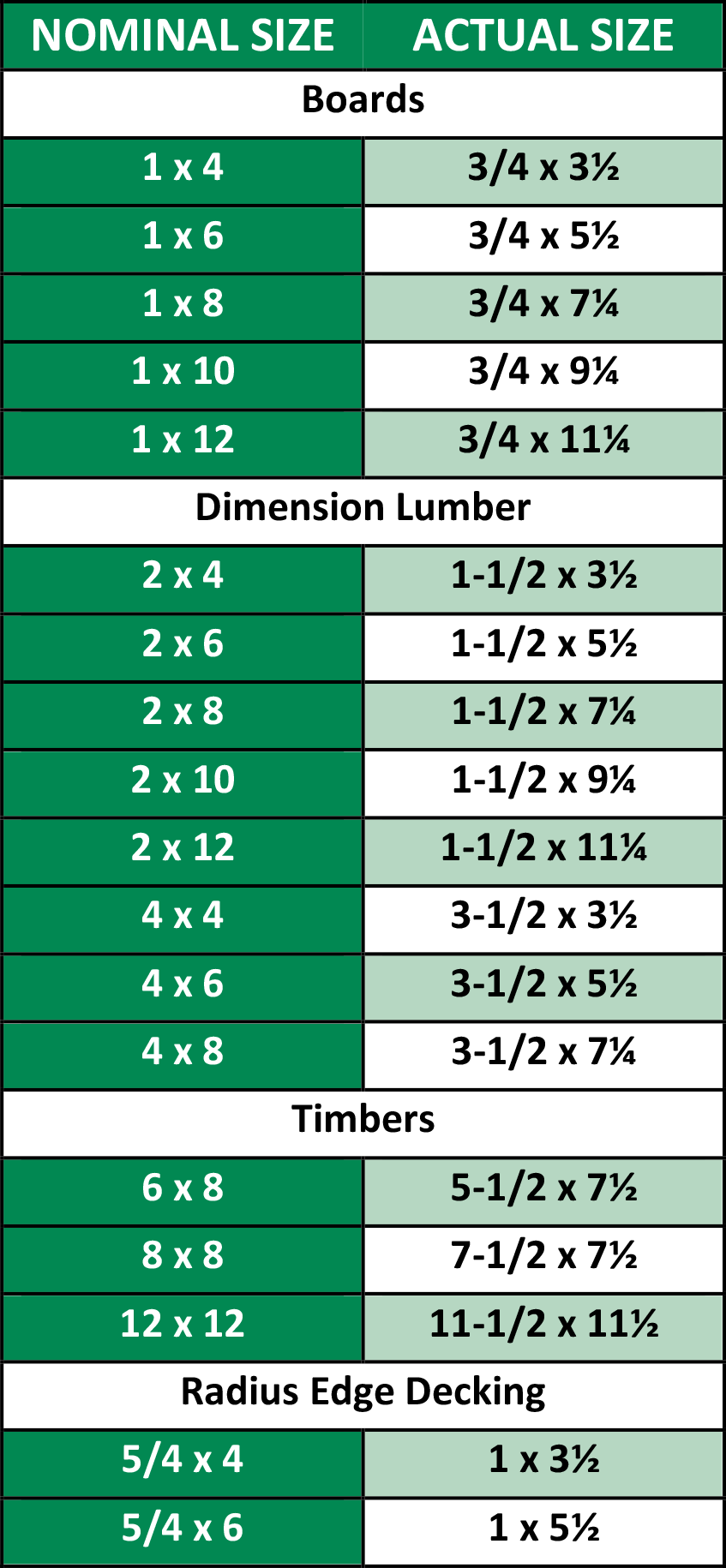
In the U.S., lumber falls into four main categories:
- Boards: about 1 inch thick
- Dimension lumber: 2 to 4 inches thick (like your famous 2×4)
- Timbers: more than 5 inches thick
- Radius edge decking: 5/4 inches thick with rounded edges for smoother surfaces
Each of these categories has two measurements:
- Nominal size (the name you buy it by — like “2×4”)
- Actual size (the real dimensions after drying and surfacing)
So Why Is a 2×4 Smaller Than 2 Inches by 4 Inches?
When lumber is first cut from a log, it really is close to 2 inches by 4 inches. But that’s when it’s freshly sawn and full of moisture — what we call “green” wood.
Before it’s ready for use, that lumber goes through two important steps:
- Kiln drying, which removes moisture and naturally causes the wood to shrink.
- Planing (surfacing), which smooths rough edges for consistent size and a clean finish.
By the time it’s ready for your next home project, that 2×4 now measures about 1½ inches by 3½ inches — a standard size used across the industry.
What About Length?
Good news! When you buy lumber labeled 8, 10, or 12 feet long, that’s exactly what you get. The lengths are true to size even though the thickness and width are nominal.
And thanks to U.S. lumber grading rules, those finished dimensions are consistent everywhere — no matter which mill produced them.
A Brief History of Lumber Standardization
Here’s a fun fact: in the 1800s, there were no standard sizes. Every mill cut lumber differently, which made building a nightmare for contractors and consumers alike.
It wasn’t until the 1920s that the lumber industry and Congress stepped in to create uniform size standards — giving us the reliable, consistent system we still use today.
The Bottom Line
So the next time you grab a 2×4, remember:
- “2×4” is its nominal size, not its actual size.
- Its true dimensions — 1½ by 3½ inches — are the result of drying and finishing for quality and consistency.
- And those standards make building safer, easier, and more predictable for everyone.
Because in the world of lumber, precision matters.