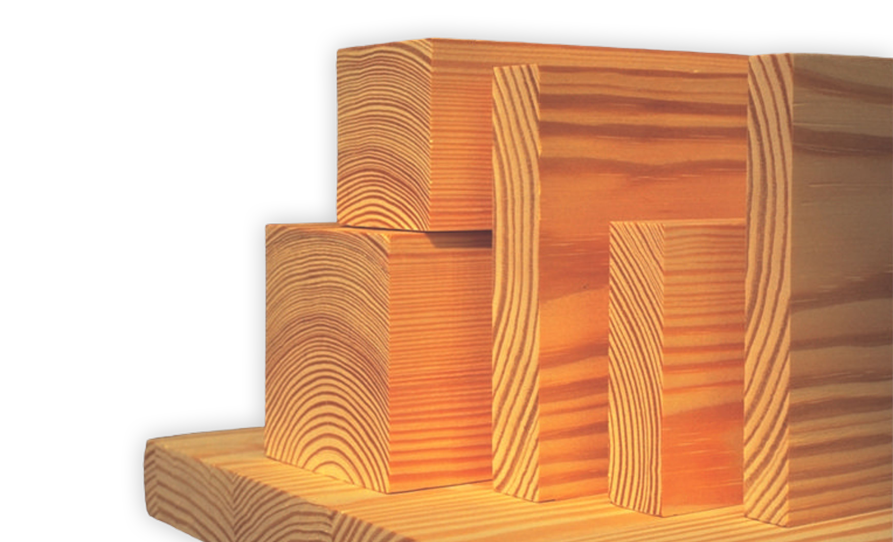
The Southern Forest Products Association facilitated a task group of industry leaders representing key customer groups to develop answers to the most commonly asked questions regarding new design values and their implementation.

Download this as PDF


Questions & Answers

New Design Values for Visually Graded Southern Pine Dimension Lumber


Updated January 31, 2012

The Southern Pine Inspection Bureau (SPIB) has issued Supplement No.9 to the 2002 Standard Grading Rules for Southern Pine Lumber providing new design values effective June 1, 2012. The only design values that will change on June 1 apply to visually graded Southern Pine and Mixed Southern Pine sized 2" to 4" wide and 2" to 4" thick (2x2s through 4x4s) in No.2 and lower grades (No.2, No.3, Stud, Construction, Standard and Utility). New design values for No.2 Dense and No.2 NonDense, pending approval by the Board of Review of the American Lumber Standard Committee (ALSC), will also become effective June 1, 2012.

Design values for all other grades and sizes of visually graded Southern Pine remain the same, pending results of testing scheduled for completion later in 2012.

Supplement No. 9 lists the following new reference design values, effective June 1, 2012.

Southern Pine & Mixed Southern Pine Reference Design Values

values in psi (pounds per square inch)

  Bending Fb Tension Parallel to Grain Ft Shear Parallel to Grain Fv Compression Perpendicular to Grain
Fc ┴
Compression Parallel to Grain
Fc
Modulus of Elasticity E
2" to 4" Thick, 2" to 4" Wide Only
No.2 Dense1 1150 750 175 660 1250 1,500,000
No.2 1050 650 175 565 1100 1,400,000
No.2 N1 975 575 175 480 1050 1,200,000
No.3 & Stud 600 375 175 565 625 1,200,000
Construction 800 500 175 565 1150 1,300,000
Standard 450 275 175 565 950 1,200,000
Utility 200 125 175 565 625 1,100,000
1 New design values for No.2 Dense and No.2 NonDense are pending approval by the Board of Review of the American Lumber Standard Committee.

You can download this new design value table here

Disclaimer:

Reference design values are based on normal load duration and dry service conditions. Because the strength of wood varies with conditions under which it is used, these design values should only be applied in conjunction with appropriate design and service recommendations from the National Design Specification® (NDS®) for Wood Construction published by the American Wood Council.

Southern Pine design values are published by the Southern Pine Inspection Bureau after approval by the Board of Review of the American Lumber Standard Committee. The Southern Forest Products Association does not test lumber or establish design values. Neither the Southern Forest Products Association, nor its members, warrant that the data or design values on which the recommended uses of Southern Pine lumber contained herein are based is correct, and disclaim responsibility for injury or damage resulting from the use of such design values.

The conditions under which lumber is used in construction may vary widely, as does the quality of workmanship and construction methods. Neither the Southern Forest Products Association, nor its members, have knowledge of the quality of the workmanship or construction methods used on any construction project, and, accordingly, do not warrant the design or performance of the lumber in completed structures.


1.Q: Which grades and sizes are affected by SPIB's Supplement No.9 to the Grading Rules?

A: Only visual grades equivalent to or lower than No.2 Southern pine are affected. This includes No.2 (plus No.2 Dense and No.2 NonDense), No. 3, Stud, Construction, Standard and Utility grades for Southern Pine and Mixed Southern Pine. Southern Pine includes the four main species of loblolly, longleaf, shortleaf and slash. Mixed Southern Pine includes Virginia Pine and Pond Pine.
The only sizes affected are 2" to 4" wide and 2 to 4" thick. This includes 2x2s, 2x3s, 2x4s, 3x3s, 3x4s and 4x4s.


2.Q: What changed with Dense and NonDense lumber?

A: Based on recent testing of No.2 2x4s, SPIB's October and December 2011 submittals to the ALSC Board of Review proposed new design values for all unclassified grades and sizes of visually graded Southern Pine dimension lumber. SPIB did not originally propose separate Dense and NonDense design values because the No.2 2x4 data could not reasonably be extrapolated to that level of detail for all grades and sizes.

When the ALSC Board of Review approved design values for only 2x4s in No.2 and lower grades, the SPIB Board of Governors decided it was reasonable to propose new design values for No.2 Dense and No.2 NonDense 2x4s based on the No.2 2x4 data. These proposed design values are pending approval of the ALSC Board of Review which is scheduled to meet on February 23, 2012. New design values for No.2 Dense and No.2 NonDense 2x4s will also become effective June 1, 2012.


3. Q: What about Prime lumber grades?

A: Design values for the Prime grades remain tied to their corresponding dimension lumber grade. No.2 Prime will have the same new design values as No.2, while No.1 Prime will have the same design values as No.1.


4. Q: Which lumber properties have new design values?

A: Four lumber properties have new design values:

  1. Bending (Fb)
  2. Tension parallel-to-grain (Ft)
  3. Compression parallel-to-grain (Fc )
  4. Modulus of Elasticity (E and Emin)


5. Q: What about design values for the other lumber properties?

A: Design values for shear parallel-to-grain (Fv) and compression perpendicular-to-grain (Fc ┴) are based on specific gravity. SPIB did not propose a change in specific gravity based on the latest testing of only No.2 2x4s, but will re-evaluate this decision once the full matrix test results are available. Because specific gravity was not changed at this time, the design values for shear parallel-to-grain and compression perpendicular-to-grain also were not changed.


6. Q: When will the new design values become effective?

A: June 1, 2012 to allow for an orderly transition.


7. Q: What happens during the transition period between now and June 1, 2012?

A: The intent of the June 1 effective date is to minimize project delays and supply chain disruptions by providing time to manage design value changes. The six-month transition period allows the marketplace to begin to use the new design values or switch to other Southern Pine grades or sizes meeting strength and stiffness requirements. Southern Pine users should establish and begin implementation of a transition plan, but exactly how that is accomplished is up to each individual. Some possible options include:

  • Set a date between now and June 1, 2012 to begin using the new design values to allow for a smooth design and inventory transition.
  • Use the current design values to complete projects in process, and then begin using the new design values for new projects.

Current design values are available here.
New design values are available here.


8. Q: How are design values implemented into building codes?

A: The June 1, 2012 effective date is to provide transition time to make necessary changes to industry standards. Design values are recognized in building codes by reference to the NDS® Design Values for Wood Construction Supplement. The American Wood Council (AWC) plans to issue Addendums to the 2005 and 2012 NDS® Supplements following the ALSC Board of Review's approval of new design values for No.2 Dense and No.2 NonDense 2x4s.


9. Q: How do design value changes affect prescriptive requirements in the building codes?

A: Prescriptive requirements, such as ceiling joist and rafter span tables that include Southern Pine 2x4s in No.2 and lower grades, will need to be revised. AWC will develop necessary changes to AWC standards and model building codes based on the new design values.


10. Q: When will the new design values be enforced?

A: Building codes are enforced by the state, regional or local jurisdiction, so exactly when enforcement begins will vary by jurisdiction. The six-month transition period is to provide time for the jurisdiction to make the necessary code amendments and to prepare for enforcement beginning June 1, 2012.


11. Q: What happens to projects in process that span the June 1, 2012 effective date?

A: Under standard code enforcement practices (e.g. Section R106.3.2 Previous approvals in the 2012 International Residential Code), the design value in effect at the time the project is permitted should govern, even when a project is not completed by June 1, 2012. However, to ensure an orderly transition and avoid potential delays, confer with the building designer and/or local building department.


12. Q: What does this mean for existing inventories of lumber in the supply chain?

A: Visually graded lumber is identified with a grade mark that includes the grade name (e.g. No.2), but not the specific design values associated with that grade name. Therefore, No.2 and lower grades of 2" to 4" thick and 2" to 4" wide Southern Pine in inventory will continue to have the current design values associated with it up until June 1, and then the new design values will be associated with it beginning June 1, 2012.


13. Q: How can I get similar load-carrying capacities as before?

A: One option is to specify a larger size and/or higher grade of visually graded Southern Pine lumber. Another option is to specify mechanically graded lumber which includes Machine Stress Rated (MSR) lumber and Machine Evaluated Lumber (MEL).
Some possible substitutes for 2x4 No.2 Southern Pine include:

  • 2x6 No.2 Southern Pine
  • 2x4 No.1 NonDense and better Southern Pine visual grades
  • 2x4 MSR or MEL Southern Pine grades shown below


Southern Pine MSR & MEL Reference Design Values

values in psi (pounds per square inch)

 Grade Bending Fb Tension Parallel to Grain Ft Shear Parallel to Grain Fv Compression Perpendicular to Grain
Fc ┴
Compression Parallel to Grain
Fc
Modulus of Elasticity
E
Machine Stress Rated (MSR)
1450f – 1.3E

1450

825

175

565

1600

1,300,000

1450f – 1.5E

1450

825

175

565

1600

1,500,000

1500f – 1.5E

1500

900

175

565

1650

1,500,000

1500f – 1.6E

1500

900

175

565

1650

1,600,000

1500f – 1.7E

1500

900

175

565

1650

1,700,000

1650f – 1.5E

1650

1020

175

565

1700

1,500,000

1650f – 1.7E

1650

1020

175

565

1750

1,700,000

Machine Evaluated Lumber (MEL)
M - 38

1500

900

175

565

1650

1,600,000

M - 11

1550

850

175

565

1675

1,500,000

M - 12

1600

850

175

565

1675

1,600,000

M - 13

1600

950

175

565

1675

1,400,000

M - 39

1650

1020

175

565

1750

1,700,000


  • Not all of the possible MSR and MEL grades will be produced. The marketplace will eventually determine the most common grades.
  • 1500f-1.6E MSR and M-38 MEL are the closest direct substitutes for the current design values associated with No.2 2x4s.

Some possible substitutes for 2x4 No.3 and Stud Southern Pine include:

  • 2x6 No.3 Southern Pine
  • 2x4 No.2 NonDense and better Southern Pine visual grades
  • 2x4 MSR or MEL Southern Pine grades shown below


Southern Pine MSR & MEL Reference Design Values

values in psi (pounds per square inch)

 Grade Bending Fb Tension Parallel to Grain Ft Shear Parallel to Grain Fv Compression Perpendicular to Grain
Fc ┴
Compression Parallel to Grain
Fc
Modulus of Elasticity
E
Machine Stress Rated (MSR)
750f – 1.4E

750

425

175

565

925

1,400,000

850f – 1.4E

850

475

175

565

975

1,400,000

975f – 1.6E

975

550

175

565

1450

1,600,000

Machine Evaluated Lumber (MEL)
M - 32

750

425

175

565

925

1,400,000

M - 33

850

475

175

565

975

1,400,000

M - 5

900

500

175

565

1050

1,100,000

M - 34

975

550

175

565

1450

1,600,000

  • Not all of the possible MSR and MEL grades will be produced. The marketplace will eventually determine the most common grades.
  • 850f-1.4E MSR and M-33 are the closest direct substitutes for the current design values associated with No.3 and Stud 2x4s.


14. Q: Why are only some grades and sizes affected at this time?

A: The recently completed phase of testing performed by SPIB and Timber Products Inspection involved only No.2 2x4s. ASTM D1990 – the standard for determination of design values based on tests of full-size pieces of lumber – requires a minimum of two grades and three widths in order to model grade and size performance. Grades lower than No.2 are affected because design values for those grades are projected from No.2 test data.


15. Q: Will there be more testing of other grades and sizes of Southern Pine lumber?

A: Yes. Testing is currently underway to fill out the full In-Grade testing matrix, consistent with ASTM D1990. SPIB and Timber Products Inspection have already begun sampling Select Structural 2x4s, No.2 and Select Structural 2x8s, and No.2 and Select Structural 2x10s. They will conduct destructive tests in bending, tension parallel-to-grain and compression parallel-to-grain, plus gather stiffness and property data. Testing is scheduled to be completed later in 2012.


16. Q: Are additional design value changes expected once all the testing is completed?

A: Yes. Reductions in design values for the other grades and sizes of visually graded Southern Pine are expected with completion of the full matrix testing. On the other hand, compression parallel-to-grain design values for the No.2 and lower 2x4 grades are expected to increase. Specific gravity may be reduced once all the testing is completed. It is also possible that further adjustments will be made to the new design values for No.2 and lower 2x4 grades when the complete data set is available.


17. Q: How will I know when updated information on new design values is available?

A: To aid users in the transition to new design values, the wood products industry has already begun to publish helpful design information. Additional information will be posted as it becomes available. Click here to receive update notices from the Southern Forest Products Association. Or visit industry association websites for:


18. Q: Should I continue to use Southern Pine?

A: Yes. Southern Pine lumber remains one of the best construction products on the market today. It is the only lumber species that has been monitored annually since 1994, making it the most tested wood species in America. Southern Pine lumber continues to provide great value with its dependable strength and superior treatability against decay and termites. Southern Pine forests are some of the most productive and sustainable timberlands in the world, capturing large amounts of carbon from the air and storing it in lumber used every day. Southern Pine is grown and manufactured in the U.S. South, further improving local economies, reducing transportation costs and minimizing impacts on the environment.


SUPPLEMENTAL QUESTIONS & ANSWERS

S1 Q: Will the changes affect existing homes or homes currently under construction?

A: Like other building materials, wood products used in construction must meet building code requirements. The integrity of existing structures designed and built using design values meeting applicable building codes at the time of permitting does not change. When properly designed and built, light-frame wood construction includes repetitive structural systems for continued performance. The final report of the Southern Pine Design Value Forum, dated December 15, 2011, includes a review of the margin of safety for in-market lumber.


S2 Q: What impact will the new design values have on homes built in the future?

A: Homeowners should not notice much difference, but building designers may configure the individual pieces of lumber differently in the structural system. Building materials used in construction have guidelines for proper use. Wood product guidelines incorporating the new design values will continue to include a series of redundancies and checks and balances.


S3 Q: Did the Southern Pine Grading Rules change?

A: No. Lumber grades and the rules that define each grade will not change. Only the design values associated with the affected grades and sizes of visually graded Southern Pine dimension lumber changed.


S4 Q: Did design values for other Southern Pine lumber products change?

A: No. Design values for other Southern Pine lumber products covered by the SPIB's Grading Rules – such as mechanically graded lumber, timbers and specialty items – did not change.


S5 Q: Did design values for Southern Pine laminated beams change?

A: No. Laminated beams use special laminating grading rules requiring visual or mechanical overrides. Before being used in a beam, each piece of laminating stock lumber is evaluated based on more restrictive strength-reducing characteristics than required for visually graded lumber.


S6 Q: How are design values derived?

A: Design values provide guidance for designers to calculate the performance of a structural system and are assigned to six basic lumber properties. Design values for stiffness, as well as the major strength properties of bending, tension and compression parallel-to-grain, are based on data from destructive testing of samples of commercially-produced structural lumber. Design values for the minor strength properties of shear and compression perpendicular-to-grain are based on published clear-wood properties.

Design values for structural lumber go through a rigorous approval process. As the rules-writing agency for Southern Pine lumber, SPIB is responsible for developing and publishing design values for Southern Pine. All testing and data analysis must be completed in accordance with approved standards. Proposed design values are submitted to the ALSC Board of Review and approved following a careful review and recommendation from the U.S. Forest Products Laboratory.


S7 Q: How often are design values changed?

A: Design values have changed multiple times over the years based on available test data. The lumber industry conducts ongoing testing and invests millions of dollars to provide the most accurate and reliable design values for structural lumber. Comprehensive lumber testing is conducted as new technology becomes available or as warranted by changing resource data. The first significant lumber tests began in the 1920s, resulting in design values based on the strength of small clear-wood specimens. The last major change occurred in 1991 when design values for Southern Pine and other North American species were published based on In-Grade testing of full-size samples of commercially produced lumber.


S8 Q: What caused the Southern Pine design values to change?

A: SPIB did not specifically study why a change occurred, but a change in the timber resource mix is one of many variables that can affect the strength of structural lumber.


S9 Q: What about design values for other North American structural lumber species?

A: Southern Pine is the only lumber species that has been monitored on an annual basis since 1994. This monitoring experience allowed the Southern Pine industry to be the first to conduct an enhanced testing program, making Southern Pine lumber the most tested species in America. Rules-writing agencies responsible for other species are in different stages for evaluating design values.


S10 Q: Will other North American structural lumber species be required to conduct
regular testing?

A: Yes. Going forward, ALSC will require destructive testing for the main structural softwood lumber species at least every three years. Southern Pine will continue to be tested on an annual basis.


More background information is available, read these News Releases.

New Design Values Q%26A

Questions & Answers

about New Design Values for Visually Graded Southern Pine
Dimension Lumber

More background information is available, read these News Releases.

January 16, 2012

Southern Pine reference design values are published by the Southern Pine Inspection Bureau (SPIB) after approval by the Board of Review of the American Lumber Standard Committee (ALSC).

On January 11 & 12, 2012, the ALSC Board of Review approved new design values for No.2 and lower grades of 2x4 visually graded Southern Pine dimension lumber with a recommended effective date of June 1, 2012 to allow time for an orderly implementation. The ALSC Board of Review declined to approve SPIB’s proposed interim design values for other grades and sizes of Southern Pine, but was mindful that testing is currently underway on a full matrix sample.

The new design values will be listed in Supplement No. 9 to SPIB’s 2002 Standard Grading Rules for Southern Pine Lumber.

This page is in the process of being updated with the latest information. Look for revised Questions & Answers beginning January 23, 2012.

Q – How are design values derived?
A – Design values provide guidance for designers to calculate the performance of a structural system and are assigned to six basic lumber properties. Design values for stiffness, as well as the major strength properties of bending, tension and compression parallel-to-grain, are based on data from destructive testing of samples of commercially-produced structural lumber. Design values for the minor strength properties of shear and compression perpendicular-to-grain are based on published clear-wood properties.

Design values for structural lumber go through a rigorous approval process. As the rules-writing agency for Southern Pine lumber, the Southern Pine Inspection Bureau (SPIB) is responsible for developing and publishing design values for Southern Pine. All testing and data analysis must be completed in accordance with approved standards. Proposed design values are submitted to the American Lumber Standard Committee (ALSC). Design values are approved by the ALSC Board of Review following a careful review and recommendation from the U.S. Forest Products Laboratory.


Q – How often are design values changed?
A – Design values have changed multiple times over the years based on available test data. The lumber industry conducts ongoing testing and invests millions of dollars to provide the most accurate and reliable design values for structural lumber. Comprehensive lumber testing is conducted as new technology becomes available or as warranted by changing resource data. The first significant lumber tests began in the 1920s, resulting in design values based on the strength of small clear-wood specimens. The last major change occurred in 1991 when design values for Southern Pine and other North American species were published based on In-Grade testing of full-size samples of commercially produced lumber.


Q – What prompted the latest testing of Southern Pine lumber?
A – Since 1994, SPIB has conducted an annual resource monitoring program developed in collaboration with the U.S. Forest Products Laboratory. Although the level established to trigger additional testing was never reached, overall trends in the annual test data suggested a possible shift in the resource mix. These trends, along with anecdotal external information, prompted SPIB to conduct an enhanced testing program.


Q – What testing and data analysis was done?
A – SPIB and Timber Products Inspection selected full-size No.2 2x4 specimens following a sampling plan approved by ALSC. SPIB and Timber Products conducted destructive tests in bending and tension, plus gathered stiffness and property data, all in accordance with established ASTM standards. SPIB also performed the data analysis in conformance with ASTM standards and then submitted the results to ALSC. SPIB’s data analysis is currently being reviewed by FPL.


Q – What were the test results?
A – The test data indicated reductions in stiffness, as well as bending and tension strength, as compared to previously published design values.


Q – Which design values will change?
A – Design values for visually graded Southern Pine dimension lumber will be reduced for four of the six basic lumber properties:
- Bending (Fb)
- Tension parallel-to-grain (Ft)
- Compression parallel-to-grain (Fc)
- Modulus of Elasticity (E and Emin)


Proposed interim design values for these four properties may be reduced as summarized in the table below.

SPIB Proposed Interim Design Values for Visually Graded Southern Pine Dimension Lumber

PROPERTY CHANGE (approximate)
Bending -30%
Tension -20%
Compression -35%
Modulus of Elasticity -200,000 psi
Shear No Change
Compression Perpendicular No Change
Specific Gravity No Change


Q – What about the design values for the other basic lumber properties?
A – Design values for the minor strength properties of shear parallel-to-grain (Fv) and compression perpendicular-to-grain (Fc) are based on specific gravity. The average specific gravity observed from the latest testing of No.2 2x4s was not found to be different enough from the published Southern Pine specific gravity value of 0.55 to warrant a proposed change at this time. Because specific gravity is not proposed to change, the design values for shear and compression-perpendicular-to-grain are also not proposed to change.


Q – Which grades and sizes are proposed to change?
A – New design values are proposed to change for all grades and all sizes of visually graded Southern Pine dimension lumber 2” to 4” thick, 2” and wider. “All grades” includes Select Structural, No.1, No.2, No.3, Stud, Construction, Standard and Utility. “All sizes” includes 2x2s through 2x12s (and wider), 3x3s through 3x12s (and wider), and 4x4s through 4x12s (and wider).


Q – How can design values for all grades and all sizes be proposed to change when only No.2 2x4s were tested?
A – The Southern Pine industry will fill out the full In-Grade testing matrix, sampling Select Structural 2x4s, No.2 and Select Structural 2x8s, and No.2 and Select Structural 2x10s. Testing is scheduled to be completed by September 2012. In the interim, ASTM D1990 – the standard for the determination of design values based on tests of full-size pieces of lumber – includes procedures for determining design values for untested grades, sizes and major strength properties.


Q – Will the Southern Pine Grading Rules Change?
A – No. Lumber grades and the rules that define each grade will not change. Only the design values associated with the visual grades of Southern Pine dimension lumber are proposed to change.


Q – What About Dense Lumber?
A – Test results did not indicate enough of a difference between Dense, unclassified and NonDense lumber to continue publishing three different design values for each lumber grade. The result will be a simplified table with design values assigned by lumber grade without density classifications.


Q – Will I still be able to specify Dense lumber?
A – Yes. The SPIB Grading Rules will not change. Dense lumber will remain an option for Southern Pine users requiring Dense material, such as proprietary grades for laminated beams. If Dense lumber is specified, it will have the same new design values as the corresponding unclassified lumber grade.


Q – What caused the Southern Pine design values to change?
A – SPIB did not specifically study why a change occurred, but a change in the timber resource mix is one of many variables that can affect the strength of structural lumber.


Q – What about design values for other North American structural lumber species?
A – Southern Pine is the only lumber species that has been monitored on an annual basis since 1994. This monitoring experience allowed the Southern Pine industry to be the first to conduct an enhanced testing program, making Southern Pine lumber the most tested species in America. Rules-writing agencies responsible for other species are in different stages for evaluating design values.


Q – Will there be more testing done on Southern Pine lumber?
A – Yes. The Southern Pine industry will fill out the full In-Grade testing matrix, sampling Select Structural 2x4s, No.2 and Select Structural 2x8s, and No.2 and Select Structural 2x10s. SPIB and Timber Products Inspection will conduct destructive tests in bending, tension parallel-to-grain and compression parallel-to-grain, plus gather stiffness and property data. Testing is scheduled to be completed by September 2012.


Q – Will other North American structural lumber species be required to conduct regular testing?
A – Going forward, ALSC will require destructive testing for the main structural softwood lumber species at least every three years. Southern Pine will continue to be tested on an annual basis.


Q – What effect will the new design values have on maximum spans?
A – Impacts on end uses will depend on the specific application but, in general, maximum spans for typical joist and rafter applications will be reduced. Sample span tables plus span comparisons with other species are now available.


Q – What are the grading options for dimension lumber?
A – There are two primary grading methods used to sort structural softwood lumber and to assign appropriate design values – visual grading and mechanical grading. Mechanically graded lumber includes Machine Stress Rated (MSR) lumber and Machine Evaluated Lumber (MEL).


Q – How will I be able to get the same maximum spans as before?
A – One option is to specify a higher grade and/or larger size of visually graded Southern Pine lumber. Another option is to specify mechanically graded lumber. For example, possible substitutes for visually graded No.2 2x4 Southern Pine lumber include 1650f-1.5E Machine Stress Rated (MSR) or M-12 Machine Evaluated Lumber (MEL).


Q – What about design values for Mixed Southern Pine?
A – Mixed Southern Pine will have the same design values as Southern Pine. Southern Pine includes the four main species of loblolly, longleaf, shortleaf and slash. Mixed Southern Pine includes Virginia Pine and Pond Pine.


Q – Will design values for other Southern Pine lumber products change?
A – Design values for other Southern Pine lumber products covered by the SPIB’s Grading Rules – such as mechanically graded lumber, timbers and specialty items – will not change.


Q – Will design values for Southern Pine laminated beams change?
A – No. Laminated beams use special laminating grading rules requiring visual or mechanical overrides. Before being used in a beam, each piece of laminating stock lumber is evaluated based on more restrictive strength-reducing characteristics than required for visually graded lumber.


Q – When will the new design values become effective?
A – ALSC’s Board of Review must approve the SPIB proposed design values before they become effective.

1/6/12 UPDATE: Some 100 industry representatives attended the January 5, 2012 meeting of the ALSC Board of Review in Washington, DC. About a dozen presentations were made regarding the SPIB's submittals of Proposed Interim Design Values. The ALSC opened the meeting with a prepared statement noting that they "...would endeavor to reach a decision as soon as possible."

Upon ALSC approval, SPIB will publish new design values for visually graded Southern Pine lumber in Supplement No.9 to the 2002 Standard Grading Rules for Southern Pine Lumber.


Q – What does this mean for existing inventories of lumber in the supply chain?
A – Existing inventory can still be used, as existing Southern Pine design values for visually grade dimension lumber remain in effect, as before. Once the ALSC Board of Review approves the new design values and SPIB publishes them, existing inventories may need to be used differently. Visually graded dimension lumber is identified with a grade mark that includes the grade name (e.g. No.2), but not the specific design values associated with that grade name. Therefore, existing inventory will have the new design values associated with it as of the effective date of SPIB’s Supplement No.9. As before, Southern Pine grades and sizes should be used as specified on plans or construction drawings.


Q – When will the new design values be in the building code?
A – After SPIB publishes new design values for visually graded Southern Pine dimension lumber, the American Wood Council (AWC) will issue an addendum to the 2012 NDS® Design Values for Wood Construction Supplement. The 2012 Edition of the National Design Specification® for Wood Construction is adopted by reference into the 2012 International Building Code®.


Q – How will I know when new span tables and other related design publications based on the new design values are available?
A – The wood products industry will update documents related to new design values as quickly as possible after they are approved. Click here to receive update notices from the Southern Forest Products Association. Or visit industry association websites to look for:


Q – Will these changes affect existing homes, or homes currently under construction?
A – Like other building materials, wood products used in construction must meet building code requirements. The integrity of existing structures designed and built using design values meeting applicable building codes at the time of permitting does not change. When properly designed and built, light-frame wood construction includes repetitive structural systems for continued performance.


Q – What impact will the new design values have on homes built in the future?
A – Homeowners should not notice much difference, but building designers may configure the individual pieces of lumber differently in the structural system. Building materials used in construction have guidelines for proper use. Wood product guidelines incorporating the new design values will continue to include a series of redundancies and checks and balances.


Q – Should I continue to buy Southern Pine?
A – Yes.  Southern Pine lumber remains one of the best construction products on the market today. It is the only lumber species that has been monitored annually since 1994, making it the most tested wood species in America. Southern Pine lumber continues to provide great value with its dependable strength and superior treatability against decay and termites. Southern Pine forests are some of the most productive and sustainable timberlands in the world, capturing large amounts of carbon from the air and storing it in lumber used every day. Southern Pine is grown and manufactured in the U.S. South, further improving local economies, reducing transportation costs and minimizing impacts on the environment.


Q – Where can I get more information?
A – Continue to visit this website for the latest updates, including a complete listing of the new design values once they are approved.

More background information is available, read these News Releases.