Page Not Found

You have searched for a page that doesn'e exist on our site. Please use the search option above or look for more answers to some of the more frequently asked questions about Southern Pine. 

Southern Pine in Construction

  • What is Southern Pine (or Southern Yellow Pine)?

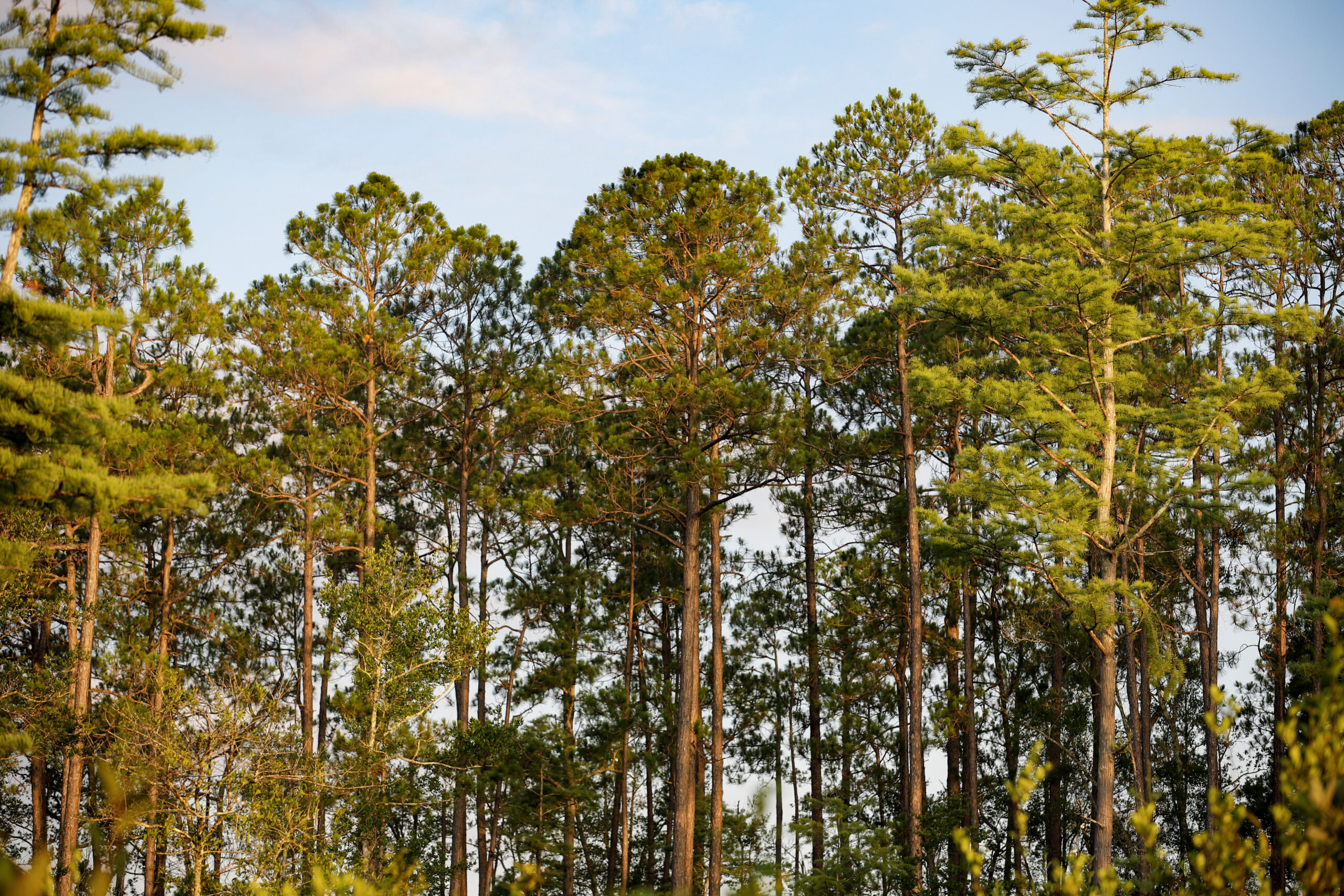
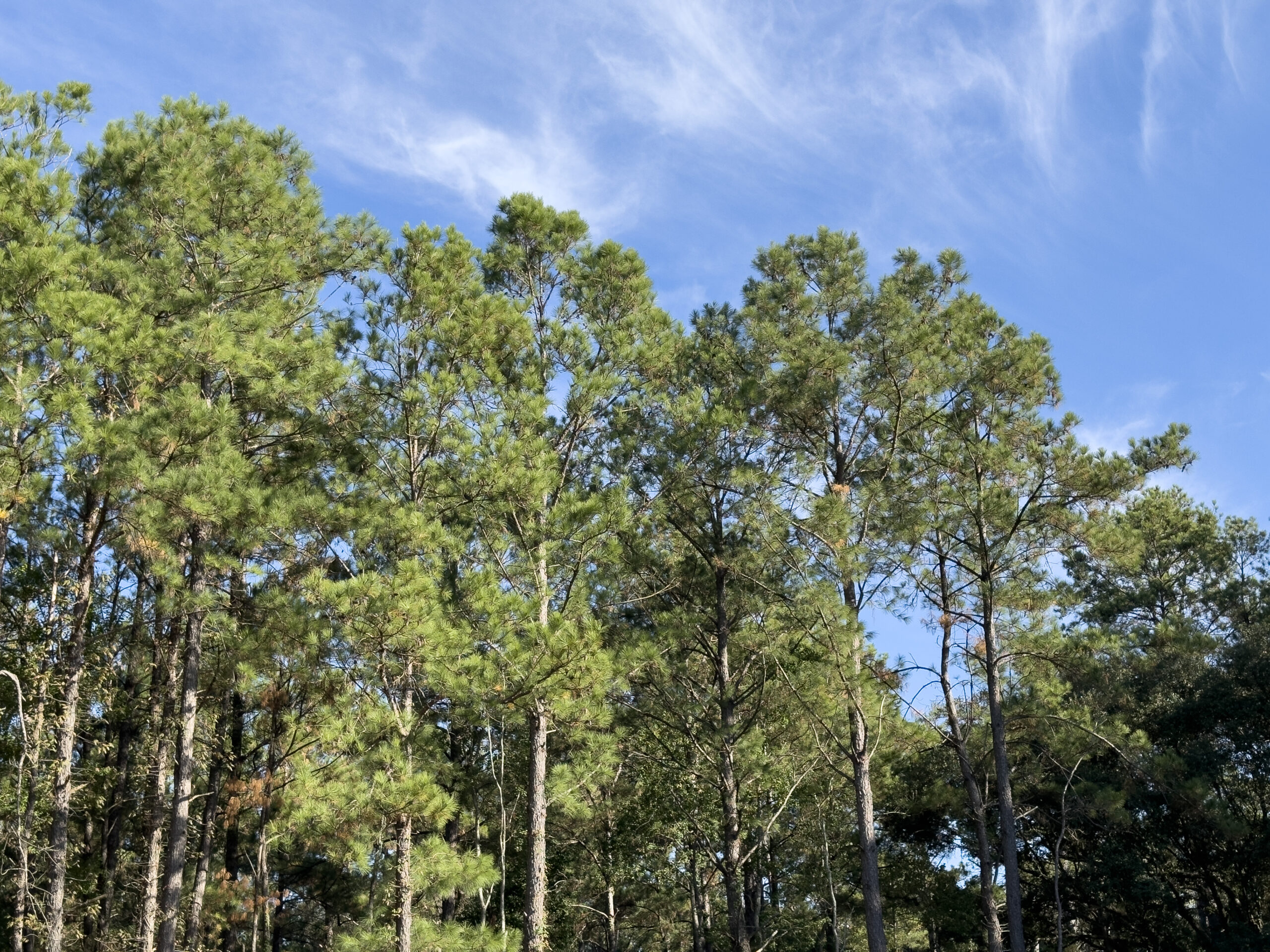
    According to the handbook Utilization of the Southern Pines, published by the USDA Forest Service, Southern Pine is defined as those species whose major range is in the United States south of the Mason-Dixon line and east of the Great Plains. There are 10 species, all "hard" pines – diploxylon (hard needled) members of the genus Pinus (see chart).

    The four principal species – loblolly, shortleaf, longleaf and slash – make up 90% of the Southern Pine timber inventory and are referred to commercially as Southern Yellow Pine. According to the Southern Pine Inspection Bureau (SPIB), the "minor" species with some commercial value include Virginia pine, pond pine and sand pine. Lumber produced from a timber mix of principal species and these minor commercial species is assigned slightly lower strength properties and is graded Mixed Southern Pine. For more information, go to Why Use Southern Pine.

    The Southern Pines
    Species Common Name
    Southern Yellow Pine
    Pinus palustris
    P. elliotii
    P. taeda
    P. echinata
    Longleaf pine
    Slash pine
    Loblolly pine
    Shortleaf pine
    Minor Species
    P. virginiana
    P. serotina
    P. clausa
    P. glabra
    P. rigida
    P. pugens
    Virginia pine
    Pond pine
    Sand pine
    Spruce pine
    Pitch pine
    Table Mountain pine
  • What is Arkansas Pine?
    Arkansas Soft Pine was a trade name adopted by that state's lumber manufacturers in 1916 to promote shortleaf pine (Pinus echinata) of "uniquely superior quality peculiar to the timber growing region in the southern and western areas of Arkansas." From an old Handbook for Builders (copyright 1955) produced by the now defunct Arkansas Soft Pine Bureau, the differences noted were a softer, more uniform texture, light weight, fine grain and minimum pitch.
  • What is Carolina Pine?
    Carolina Pine is a trade term generally applied to longleaf pine grown in the rolling sand hills of the Piedmont traversing North and South Carolina, an area located between the coastal plain and the mountain regions.
  • What is Dade County Pine?
    Dade County Pine is just another name for Florida Pine (see below).
  • What is Florida Pine?
    South Florida Slash Pine (pinus elliottii var. densa) is a distinct botanical variety of pinus elliottii, or slash pine. It is known to grow only in Florida with a range extending from the Lower Florida Keys to central Florida. South Florida Pine is also known as Dade County Pine. It was used widely in the construction of many historic buildings in the Miami and Key West areas of Dade County, Florida.

General lumber questions

  • What is "full sawn" lumber?
    According to the reference book Terms of the Trade published by Random Lengths "full sawn" is a term used to describe rough lumber that has been cut to full nominal size. Tolerances above the nominal size are allowed in full sawn lumber, but there is no tolerance for pieces under size at the time of manufacture. With that said, allowances in the Southern Pine Inspection Bureau grading rules for Southern Pine lumber are a bit different. If rough timber is specified, for example, Southern Pine grade rules allow a minimum 3/8-inch scant of nominal size or up to 1-inch oversize. A 6 x 6 nominal timber is 5 1/2 x 5 1/2 actual dressed S4S, or surfaced four sides, but the 6 x 6 rough timber could be sized from 5 5/8 x 5 5/8 up to 7 x 7.
  • Why does lumber sometimes warp and crack?
    Warp in lumber is any deviation of the face or edge of a board from flatness or any edge that
    is not at right angles to the adjacent face or edge. Warp can be traced to two causes:
    (a) differences between radial, tangential and longitudinal shrinkage in the piece as it dries or
    (b) growth stresses. Warp is aggravated by irregular or distorted grain and the presence of abnormal types of wood, such as juvenile wood or reaction wood. The six major types of warp are bow, crook, twist, oval, diamond and cup. Splitting and cracking result from the lumber's reaction to wet and dry moisture cycles. Exposed surface areas expand when wetted by rainfall and contract when dried by the sun. This continual process sets up stresses that can cause cracks and grain separation (checking). Protecting lumber from the elements with proper covers during storage and at the building site can help minimize warp and crack. For protection of decks and porches, go to SouthernPineDecks.com.
  • How many pieces of lumber in a pack?
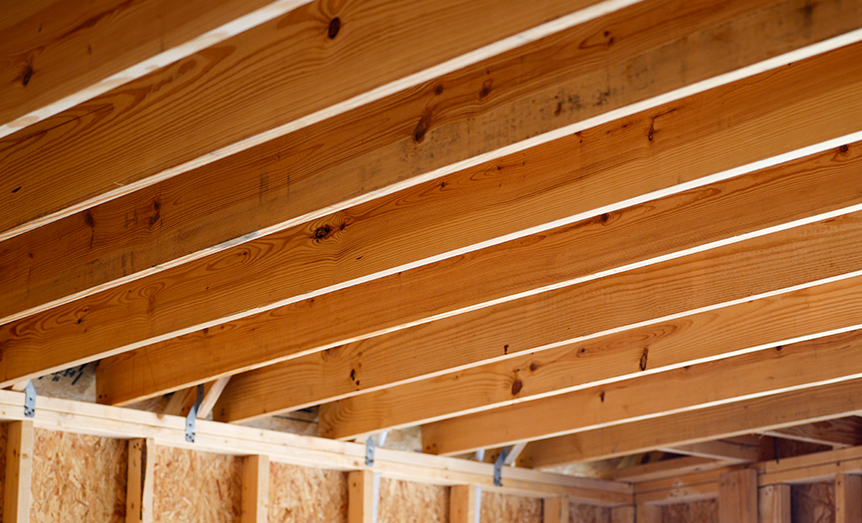
    Southern Pine lumber will be sorted at the mill by width and length before packaging. Each standard unit (or pack, bundle, bunk, lift) contains only pieces of the same width and length, which are stacked in 16 courses, or layers, about four feet wide. Number of pieces per standard pack is: 2x4 = 208 pieces, 2x6 = 128 pieces, 2x8 = 96 pieces, 2x10 = 80 pieces, 2x12 = 64 pieces.
  • Can finger-jointed lumber be used in shear wall applications?
    Structural finger-jointed lumber can be directly substituted for solid-sawn lumber of the same or weaker species, size and grade for all applications. The most common use is for wall studs. STUD USE ONLY or VERTICAL USE ONLY lumber can be used for studs under dry-use conditions when any bending or tension stresses are of short duration, such as for wind or earthquake loads. That means they can be used in both non-load bearing and load-bearing walls, except where longer-term bending or tension loads are applied, such as with soil loads acting on a permanent wood foundation.
  • What is heart pine?

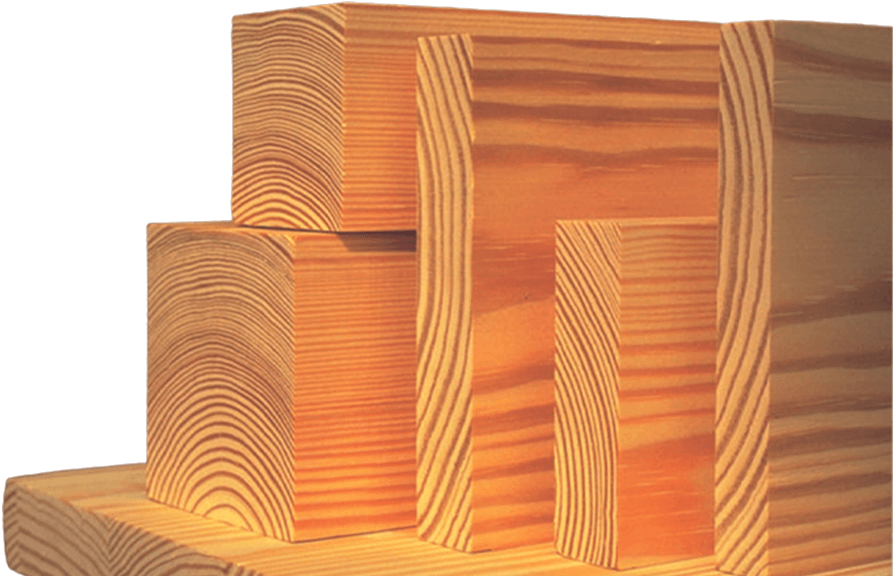
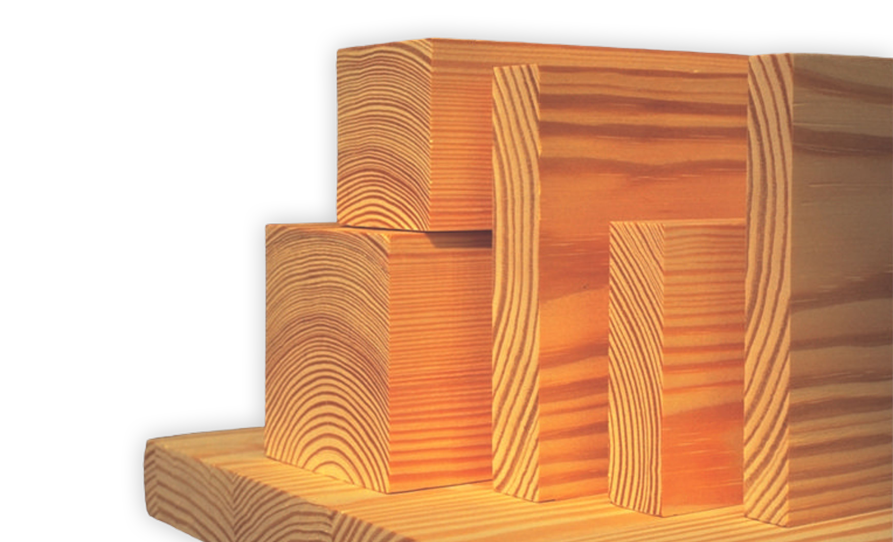
    Southern Pine lumber is composed of either sapwood or heartwood, or a combination of the two. Heartwood is the "dead" or dormant center of a tree surrounded by the living sapwood. Generally, heartwood can be distinguished from sapwood by its reddish color. Its higher density also makes it harder than sapwood. In the heart pine trade, the rule of thumb is "The redder the better." Lumber cut from the heartwood of any Southern Pine species can be considered heart pine.

    According to the special quality classifications of the Southern Pine Inspection Bureau grading rules, heart-face lumber is free from sapwood on the face side. Heart or all-heart lumber is free from sapwood throughout the piece. However, there is no set ratio of heartwood versus sapwood in the grading rules that defines heart pine lumber. Instead, SPIB rules establish measurement guidelines so the lumber buyer and seller can agree on a specified percentage of heartwood required in each piece.

    Of the 10 Southern Pine species, longleaf pine is most commonly referred to in the trade as "heart pine." It is generally characterized by tighter growth rings, higher density and greater proportion of heartwood. Longleaf lumber is so prized, it merits a special quality classification within the grading rules. However, SPIB adds another wrinkle to the heart pine puzzle. The rule states, "Longleaf lumber shall be produced only from Southern Pine tree species (botanical) of Pinus elliottii [slash pine] and P. Palustris [longleaf pine] …" Because the two species share many characteristics (long needles, higher density), both slash and longleaf timber can be manufactured as longleaf lumber if minimum requirements like ring density are met under the rules.

    Because it has a slower rate of growth, longleaf pine was not replanted as widely as other faster growing species. Consequently, longleaf pine may be in short supply while efforts are under way to increase its availability (visit the Longleaf Alliance site to find out more).

    Lumber cut exclusively from today's longleaf timber is also referred to as "new heart pine." "Antique heart pine" or "reclaimed heart pine" refers to lumber from old growth Southern Pine, regardless of species, salvaged as timbers from old factories, mills or barns, or recovered as "sinker" logs from river bottoms. Other variations on the theme include "old heart" and "river pine."

Pressure-treated lumber questions

  • How long will my pressure-treated posts last in the ground?
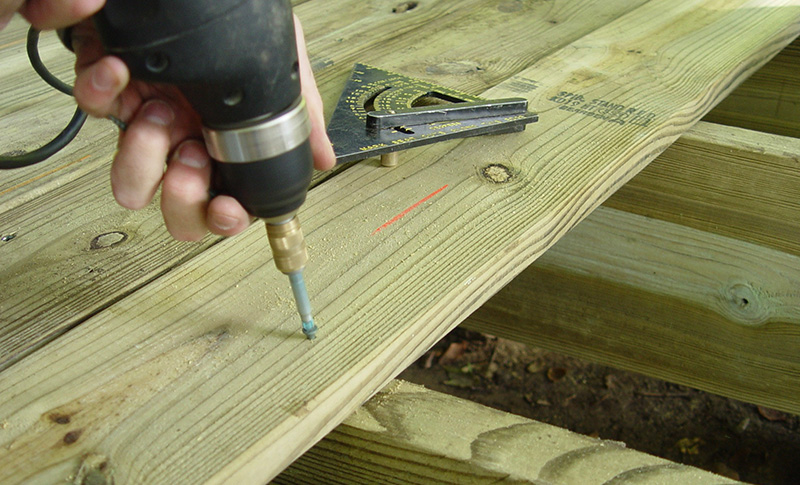
    Pressure-treated wood that has been properly treated and installed for its intended end-use can be expected to last for many decades. Ongoing tests sponsored and monitored by the USDA Forest Service's Forest Products Laboratory confirm this finding. Test stakes of treated wood have been buried in the ground at various locations from Hawaii to the Canadian border. Ongoing monitoring indicates that CCA-treated Southern Pine stakes in place since 1938 have shown no failures at chemical retention levels of 0.29 pounds of preservative per cubic foot of wood, or higher. For complete specification information, download Pressure-Treated Southern Pine.
  • What are the design values for pressure-treated Southern Pine?
    Design values are the same for treated and untreated Southern Pine. The design values for dimension lumber are based on normal use conditions (Moisture content 19% or less). These values are intended for use in covered applications, where in-service moisture content does not exceed 19%. Southern Pine design values must be adjusted by the appropriate wet-service factor (Cm) when the moisture content will exceed 19% for extended periods. The Southern Pine Use Guide contains empirical design values and adjustment factors for Southern Pine lumber. Also
    see wet-service factor span tables for pressure-treated Southern Pine in outdoor exposure or wet-use conditions.
  • Can I burn treated lumber?
    Wood treated with waterborne preservatives must not be burned because combustion breaks the unique bond formed between the preservative solution and the wood. When this bond is destroyed, the components of the preservative can be released in the form of ash and particulates, which can be harmful if inhaled. See more information on proper handling in Pressure-Treated Southern Pine.